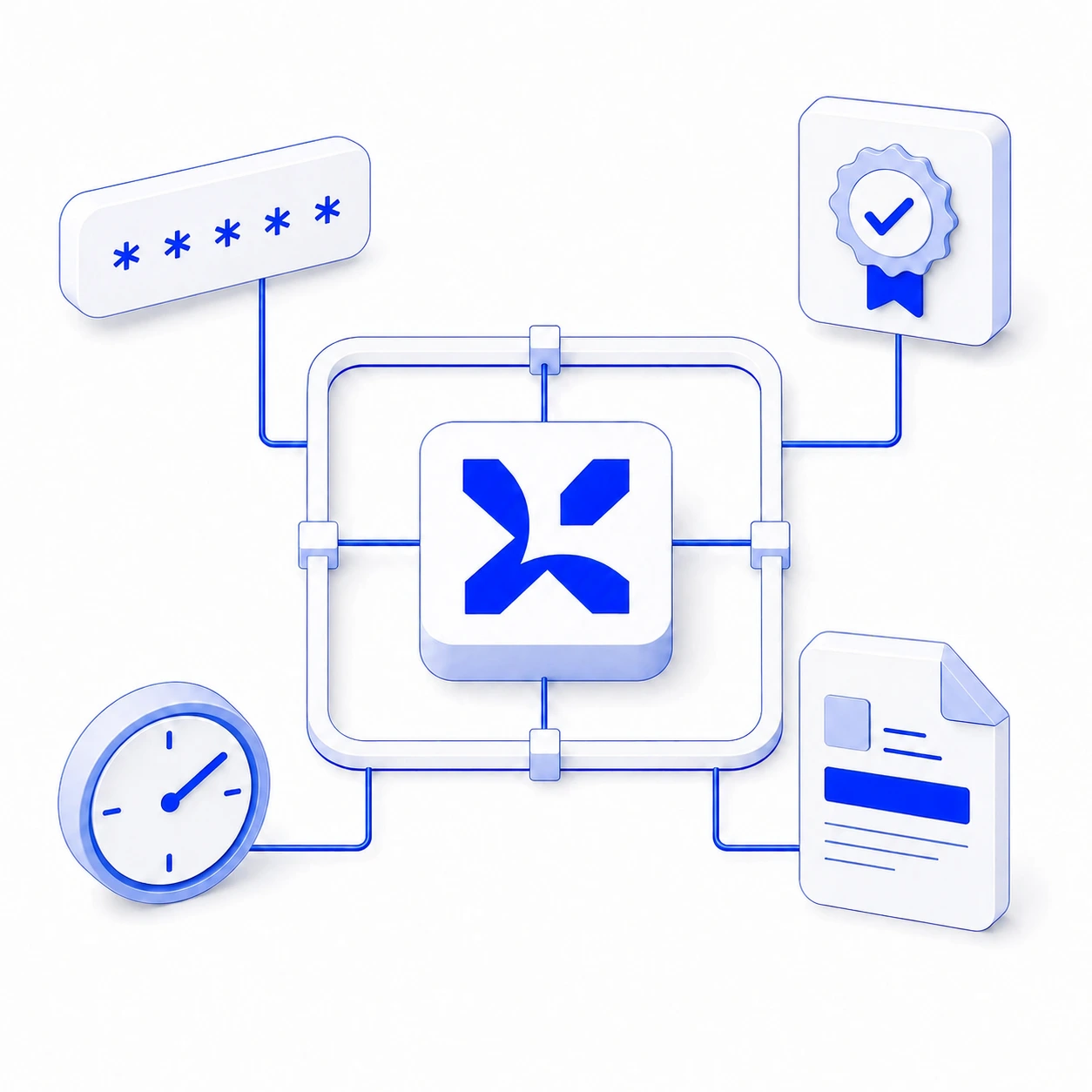

Account-scoped tokens and roles
API tokens belong to accounts, tokens are stored hashed, and workspace roles separate owner, admin, developer, billing, and support needs.
Security and controls
exdata is built for cautious adoption: account-scoped access, hashed API tokens, signed webhooks, retention controls, audit context, support tooling, and clear status reporting.
Security posture
API tokens belong to accounts, tokens are stored hashed, and workspace roles separate owner, admin, developer, billing, and support needs.
Webhook payloads include event, delivery, timestamp, and signature headers so receivers can verify the source before automation runs.
Source files, previews, extracted metadata, and operational logs can follow different retention defaults for cleaner lifecycle control.
Operational confidence
Document automation becomes fragile when failures disappear into a queue. exdata surfaces request IDs, document state, extraction run versions, blocked reasons, webhook delivery context, and account usage.
Rollout model
Use test tokens and representative documents to validate parsing, mapping, webhook handling, and support expectations.
Switch to live tokens only when downstream automation is ready for live-mode documents and credit spend.
Use document previews, extracted JSON, feedback, usage, and run metadata to improve integration behavior over time.